New research by a Black professor in Michigan shows that the struggles of America’s Indians and America’s Blacks have much in common.
Chris Rock used to tell a joke in which he said that the best boxers are always the people who have it the worst in society. In earlier generations, you found tough kids from immigrant groups — Irish, Italian and Jewish — dominating the ring, with African-Americans coming on strong in the 1940s, ‘50s and ‘60s. Then it was Latinos. “It seems the lower you go on the social ladder, the better the boxer,” went Rock’s punch line. “If there's a Puerto Rican who is a good boxer, there's a Native American waiting to kick his ass.”
It was a funny joke on its face, of course, but it was also an important bit of social commentary, too. Rock’s point: Though people often forget them when discussing America’s minority groups, Native Americans frequently have it worse than anyone.
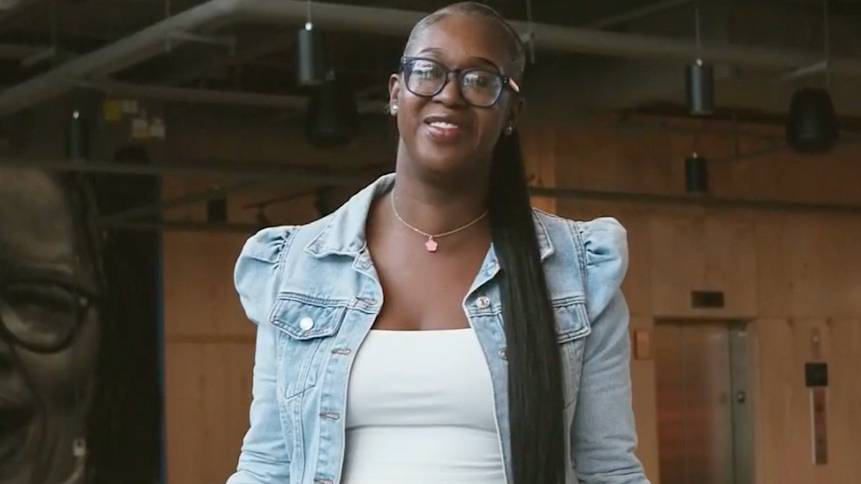
Tiya Miles, a MacArthur “Genius Grant” recipient and chair of the African-American Studies Department at the University of Michigan, is working hard to make sure people don’t forget the rich and difficult history of Native Americans. For instance, did you know that Native Americans were held as slaves, too?
In an interview with NPR, Miles explains:
Native American people in the Great Lakes were engaged in conflict, warfare with other groups of native people. And in these conflicts, Great Lakes Indians would take captives of war. Those captives of war were, for the most part, treated as slaves of a certain kind, and native people who captured these slaves brought them back to the Great Lakes and then would trade them to French settlers and to British settlers.
Miles goes on to explain that some Native Americans also owned and sold Blacks as slaves as well, capturing them from the South and then taking them North to trade. As we know now, of course, despite initially being able to participate in the slave trade with whites, eventually the native peoples were slaughtered or forced onto scrubby reservations, where they continue to struggle with poverty and substance abuse. Today, Native Americans die at rates far higher than those of anyone else in America, even Blacks.
Hopefully Miles’ research, which she’s still busy working on, will help African-Americans and Native Americans better realize that their shared history of oppression should help them work together to progress — at least more than they’ve been doing recently.
The opinions expressed here do not necessarily reflect those of BET Networks.
BET National News - Keep up-to-date with breaking news stories from around the nation, including headlines from the hip hop and entertainment world.
Videos You May Like
-
News Supreme Court Examines Key... Clip (5/24/2013)
-
News New Documentary Honors Black... Clip (5/24/2013)
-
News Should the Boy Scouts Ban Gay... Clip (5/20/2013)
-
News Blacks Brace for Social Security... Clip (5/17/2013)
-
News Former Obama Campaign Staffer... Clip (5/13/2013)
-
News President's Weekly Address... Clip (5/13/2013)
-
News Justice and the Central Park Five Clip (5/10/2013)
-
News Justin's Journey to Mental Health Clip (5/10/2013)
-
News Should Affirmative Action End? Clip (5/8/2013)
-
News Cleveland Dishwasher Becomes... Clip (5/7/2013)
-
News President's Weekly Address... Clip (5/6/2013)
-
News African-Americans Flex Voting... Clip (5/3/2013)
-
News Obama Nominee Adds Needed Diversity Clip (5/2/2013)
-
News Former CBC Chair Tapped as... Clip (5/1/2013)
-
News Obama Takes Reporters' Questions Clip (4/30/2013)
-
News Harlem Youth Take Charge of... Clip (4/30/2013)
-
News CBC Wants to Ease Expensive... Clip (4/29/2013)
-
News President Obama at the White... Clip (4/29/2013)
-
News Time to Have a Balanced Approach... Clip (4/29/2013)
-
News Undocumented and Undaunted - An... Clip (4/26/2013)
(Photo: Jeffrey Sauger/Getty Images for Home Front/Courtesy the John D. & Catherine T. MacArthur Foundation)