How Bob Kendrick Keeps the Spirit of the Negro Leagues Alive

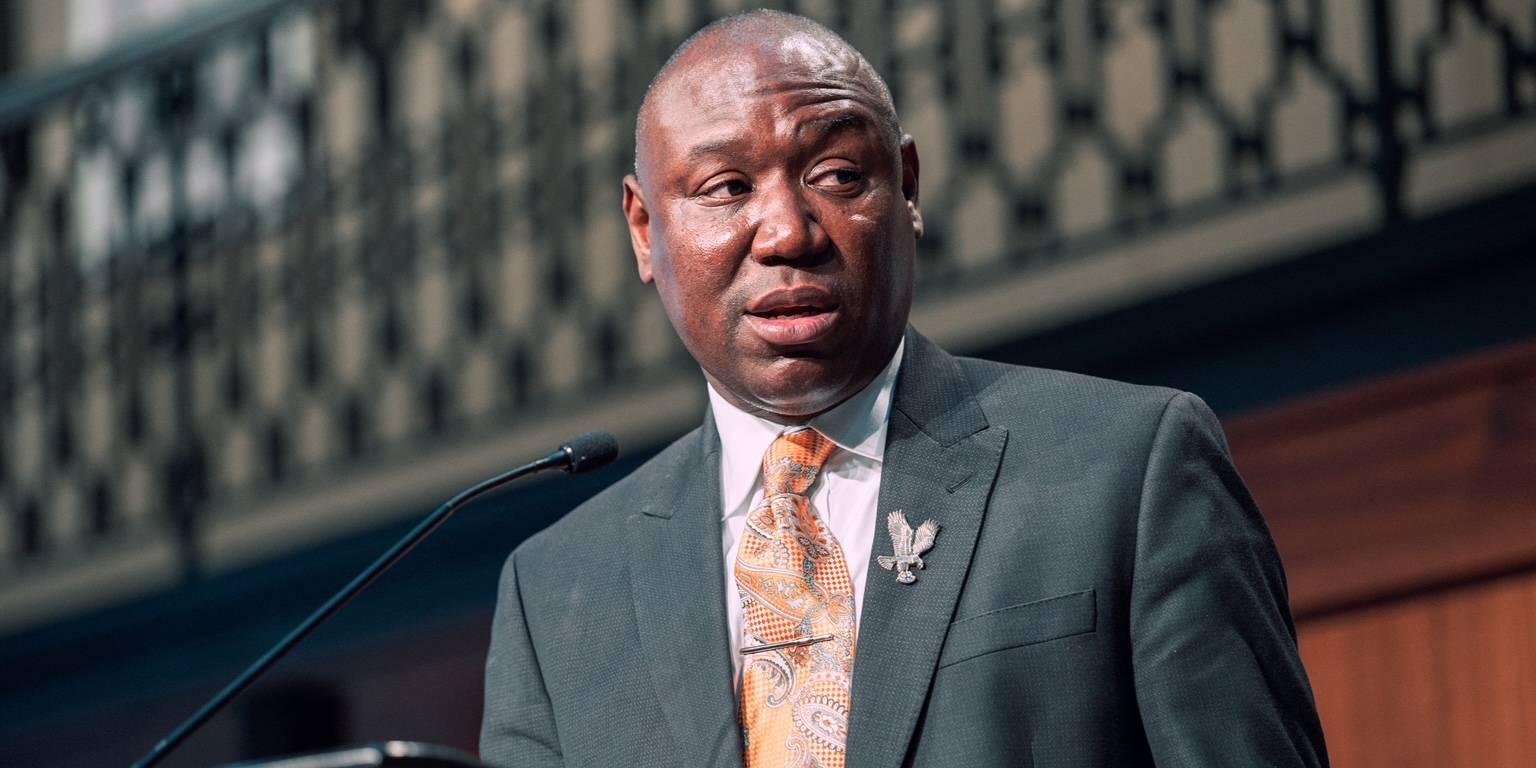
Bob Kendrick is not just the president of the Negro Leagues Baseball Museum; he is a tireless advocate, a passionate storyteller, and a keeper of a vital chapter of American history.
With a career spanning decades, Kendrick has dedicated his life to preserving the legacy of the remarkable athletes who, in the face of segregation, built their own vibrant and exceptional world of baseball. His work has elevated the museum to a nationally celebrated institution, ensuring that the stories of legends like Satchel Paige, Josh Gibson, and Buck O’Neal continue to be told with the reverence and power they deserve.
In an exclusive interview, Kendrick shared the significance of his work and how Kansas City became the location of the prestigious museum.
“Kansas City is the birthplace of the Negro Leagues. The leagues were established just around the corner from where we operate today. The leagues were formed in a YMCA on February 13, 1920, by the great Andrew “Rube” Foster and a group of eight independent black baseball team owners,” Kendrick told BET. “Out of that meeting came the first successful organized Black baseball league. So Kansas City is the fitting home of a museum that would be dedicated to preserving and celebrating this rich piece of baseball and Americana.”
Last year, MLB officially included the statistics from the Negro Leagues into its historical records following a 2020 determination to formally designate seven Negro Leagues that operated between 1920 and 1948 as "major leagues.” Kendrick, who was a part of the inclusion process, spoke of the importance of the landmark decision.
“I was so proud to be a part of that milestone occurrence, and for this museum to have had a small role in making that happen. Partnering with MLB and the dream team of historians and researchers who pulled together the necessary quantitative data to make that happen was incredible. That was a watershed moment not only for Black baseball history, Negro Leagues history, and baseball history, but American history,” he said.
“If the doors had opened before 1947, the record books would be entirely different. Well, what happened? Commissioner Rob Manfred opened up the door, and now the record books are entirely different,” Kendrick laughed.
When asked which piece of memorabilia is his favorite in the museum, Kendrick did not hesitate to share that it’s a rare photograph of his hero, the legendary Hank Aaron, which ranks at the top.
“There is a nondescript photograph, and it's my favorite photograph in the entire exhibition of a then 18-year-old Henry Aaron standing at the train station in Mobile, Alabama,” Kendrick said. “He was about to leave to join the Indianapolis Clowns in 1952, and he was just frail, skinny, and probably leaving home for the very first time.”
“He was a cross-handed hitting shortstop. As a right-handed hitter, he was hitting with his left hand on top, which is unorthodox. The fear is that you break your wrist while hitting in that manner. Well, Henry Aaron was knocking the cover off the ball in a highly unorthodox fashion. When he gets to the Clowns, they put the right hand on top, and the rest, as they say, is history. He was discovered by the Boston Braves, who would become the Milwaukee Braves, who, of course, would become the Atlanta Braves.”
One of Kendrick's greatest joys is the museum's groundbreaking partnership with Sony Interactive Entertainment for the popular video game, MLB The Show. Starting with MLB The Show 23, the game introduced a new mode called "Storylines: The Negro Leagues,” which features immersive gameplay with a playable documentary experience. Each "season" of the mode highlights a new group of Negro Leagues legends, such as Hall of Famers like Satchel Paige and Josh Gibson, narrated by Bob Kendrick
“I'm headed to San Diego in a couple of weeks to start recording content for the 26th edition of MLB The Show. And so this will be the fourth year of a five-year partnership that we have with Sony for the inclusion of Negro League players, and it has literally been game-changing for the museum. I'm not sure they would have ever thought about the Negro Leagues, but now they are flocking to the museum because they saw it in a video game.
“Now, they all want to meet the guy who's telling the stories in the video game. Here's a misnomer that our young folks don't care about history. They do care when it's in a mode and medium in which they would engage with it. We put it in a video game, the light bulb clicked, and it just makes me feel good.”
In October, Dusty Baker, Cito Gaston, Willie Randolph, Jerry Manuel, and Tony Reagins will be inducted into the Negro Leagues Baseball Museum’s Hall of Game. Established in 2014, the Hall of Game serves as a national celebration that pays tribute to Major League Baseball (MLB) players whose careers reflect the resilience, leadership, and talent that defined Negro Leagues baseball. This year’s theme honors managerial and executive excellence.
“I couldn't be more excited about this particular group of honorees of the 2025
Hall of Game class. Thematically, it ties directly into what the museum has been celebrating all year, which is the 50th anniversary of the great Frank Robinson becoming the Major League's first full-time African American manager in 1975 with the then Cleveland Indians,” Kendrick explained. “We dedicated the entire year to celebrating the unsung, great managers of the Negro Leagues. With MLB integration, they looked at the playing field, but for these brilliant managers and risk-taking executives, there were no opportunities for them.
“Our very own Buck O'Neil became the first Black coach in MLB history with the Chicago Cubs in 1962, 15 years after Jackie Robinson broke the color barrier. Then Frank became the first Black manager in 1975, and Bill Lucas became the first Black GM in 1976. So the process was so slow and the opportunities were limited,” he continued. “So, the 2025 Hall of Game class, we wanted to put the focus on that African American managerial brilliance. We are looking forward to it.”