When Hair Is Heritage: The History Behind Protective Styles

In a world that still polices and politicizes Black hair, protective styles have always been more than just a choice, they’ve been a statement. They’re as much about preserving the health of our strands as they are about preserving a legacy.
From the intricate braiding patterns of ancient Africa to the bold locs of revolutionaries and artists, these styles tell stories of survival, pride, resistance, beauty, and cultural memory. And while they’ve made their way into runways and red carpet glam, they were never just trends. They were tools of survival. Symbols of status. Signs of belonging.
Let’s break down the deeper meaning behind some of our most cherished protective styles.
Box Braids: Power, Prestige, and Preservation
Box braids have existed for thousands of years; some of the earliest depictions date back to around 550 BCE in Namibia, worn by the Himba people. These intricate plaits weren’t just about aesthetics; they signaled tribe, social status, wealth, age, and even marital status.
In modern times, box braids became both armor and expression—made iconic in the '90s by stars like Janet Jackson in Poetic Justice and Brandy in Moesha. The style's resurgence today isn’t just nostalgic—it’s political. To braid your hair, especially in public or corporate spaces, is to reject Eurocentric beauty norms and root yourself in something much older than Instagram trends.
Bantu Knots: Spiraling Into Strength

Bantu knots are rooted in the Bantu-speaking people of southern and central Africa. The name “Bantu” itself refers to over 300 ethnic groups, and the style reflects that broad, vibrant cultural lineage.
These coiled mini-buns, often worn across the head in symmetric sections, are as functional as they are beautiful. They protect the ends of the hair, encourage curl definition, and radiate ancestral elegance. They also challenge gravity with their sculptural presence—a visual reminder that our hair doesn’t conform, it defies.
Even the term “Bantu knot” has been reclaimed by Black communities worldwide after being misnamed and mislabeled by fashion houses for years.
Locs: Spiritual, Political, Personal

Locs—sometimes called dreadlocks (though many reject the “dread” due to colonial roots)—have existed for millennia. Ancient Egyptian pharaohs wore them. Hindu sadhus wore them. But in the African diaspora, particularly among enslaved Africans and later Black revolutionaries, locs became a deeply symbolic act.
They represented a refusal to assimilate. A spiritual connection to the divine. A rebellion against white supremacist norms of “neatness” and “professionalism.” In Rastafarianism, locs are worn to signify a rejection of Babylon—meaning oppression, capitalism, and Eurocentric ideals.
In today’s society, locs are still met with scrutiny in workplaces and schools. Yet, they continue to thrive as a testament to our freedom and refusal to shrink. They are living, growing records of time and transformation.
Cornrows: Geometry, Resistance, and Mapping History
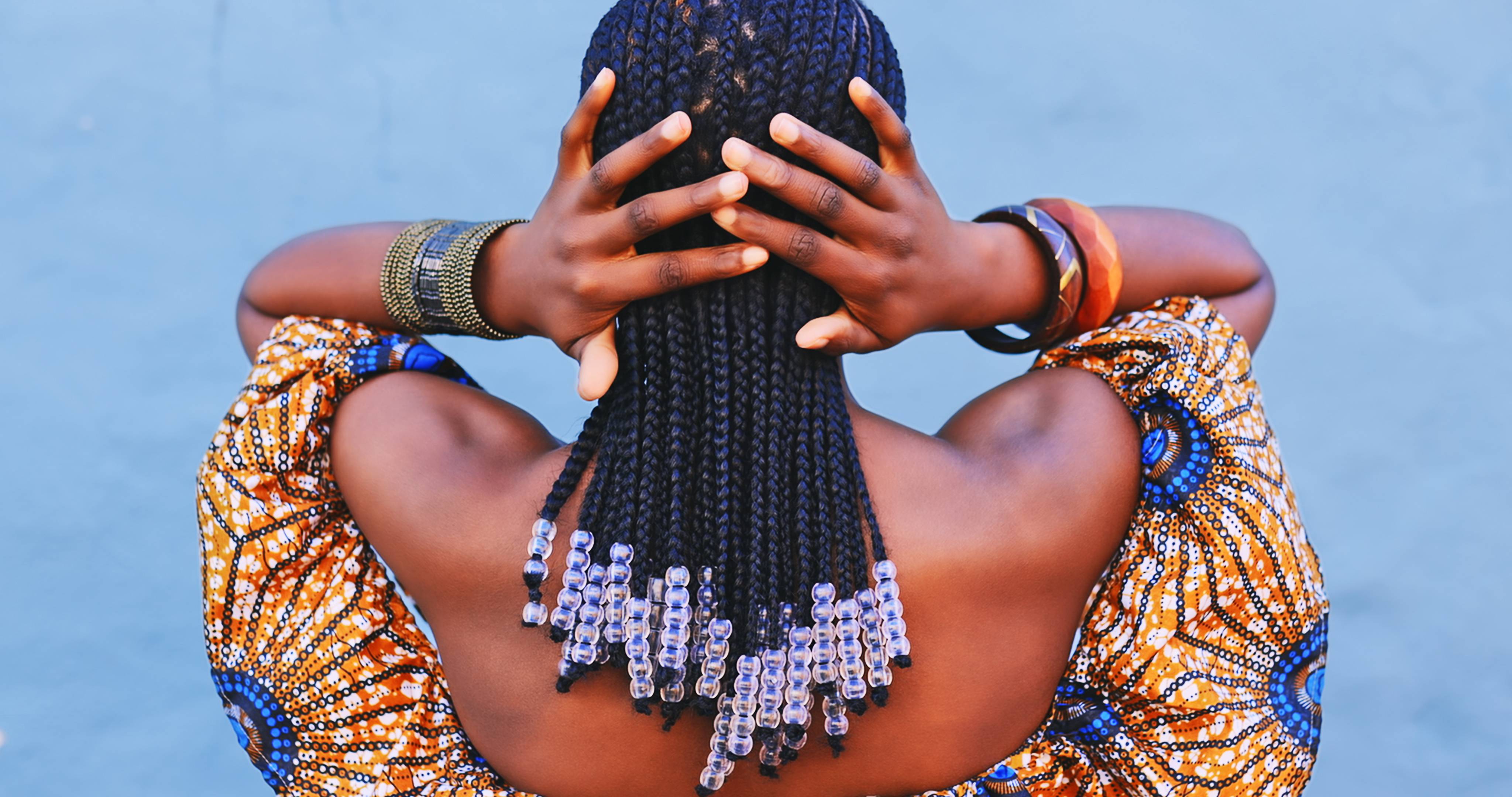
Cornrows are perhaps one of the most widely worn and historically significant protective styles. Archaeologists have found depictions of cornrowed hair dating back over 5,000 years in African civilizations. But the significance of the patterning goes beyond beauty.
During slavery, cornrows became a way to maintain some form of identity and cultural memory. Today, cornrows are used to prep hair for wigs, weave, or just everyday wear—but their origins speak to ingenuity, resilience, and coded resistance. Every part, every row, every braid is a line back to ourselves.
Beyond the Trend Cycle
Protective styles are having a moment in fashion—but let’s be clear: they were never made for mass appeal.
When a white celebrity wears cornrows, it’s called edgy. When we wear them, we’re called “unprofessional” or “too ethnic.” That double standard isn’t just frustrating—it’s harmful.
But no matter how many Pinterest boards or TikTok “tutorials” pop up, the essence of these styles remains ours. Created by us. For us.
They carry memory. Ritual. Rhythm. They speak without us having to say a word.
Why This History Matters
In an era of increasing cultural appropriation, it’s more important than ever to name the origin of these styles and honor the people behind them.
To wear your hair in box braids or cornrows or locs is to carry a story on your scalp. It's a reclamation, a form of self-preservation, and a refusal to conform. It's a link to ancestors who made beauty out of struggle, who communicated with each other through parts and patterns when their voices were silenced.
When hair is heritage, every twist, tuck, and braid is sacred.
And while we can celebrate these styles in the now, we must also protect their history—just like they’ve always protected us.