Senator Raphael Warnock Is Preaching from the Senate Floor

On Sunday, Senator Raphael Warnock will once again walk across the Edmund Pettus Bridge. It’s a journey he’s made before, but this year—on the 60th anniversary of Bloody Sunday—it feels heavier. As he prepares to step onto that bridge, the same stretch of asphalt where John Lewis and hundreds of others were beaten for daring to demand the right to vote, Warnock isn’t just thinking about the past. He’s thinking about how eerily close America is to repeating it.
"There is a growing chasm between what people want from their government and what they are able to get out of their elected leaders," he tells BET. "We’re seeing an increasing influence of billionaires and corporations at the expense of working Americans. These unelected forces are acting recklessly, making it harder for young kids to get an education and veterans to receive the care they’ve earned."
It’s a sobering statement from the pastor-turned-senator, who now finds himself preaching from the halls of Congress instead of the pulpit of Ebenezer Baptist Church. But in today’s political climate, where outrage is currency and cynicism runs high, the question is whether anyone is listening.
A Pastor in the Lion’s Den
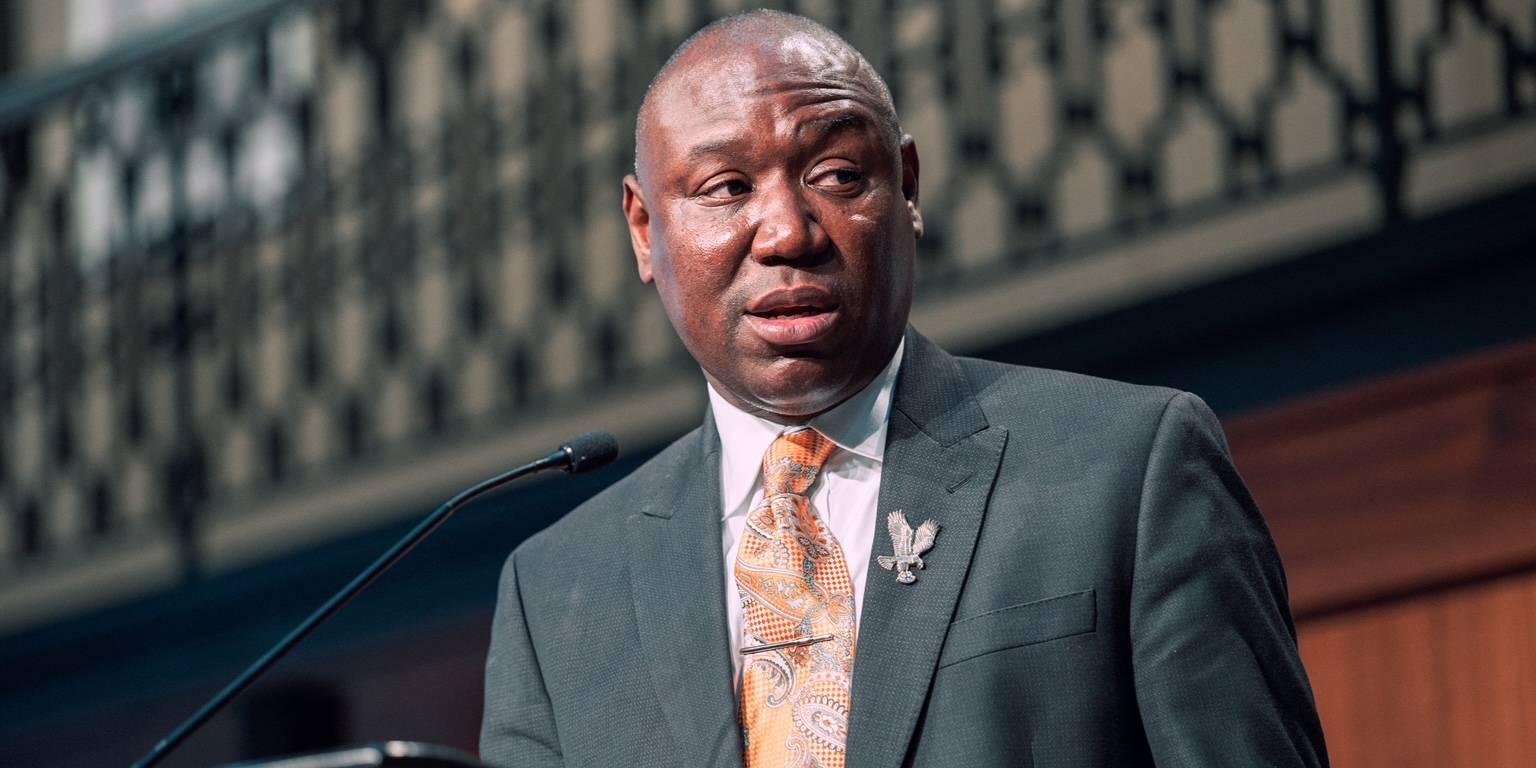
Warnock doesn’t see his work in the Senate as a departure from ministry—it’s an extension of it. "I tell folks, I am not a Senator who is a pastor. I am a pastor serving in the Senate," he says, his voice carrying the weight of generations of Black clergy who saw political activism as an act of faith.
But faith, like democracy, is a fragile thing. Since arriving in Washington, Warnock has fought to pass voting rights legislation, to protect access to healthcare, and to shield Social Security and Medicaid from what he calls “reckless” Republican policies. But time and time again, these efforts have been blocked.

Meanwhile, Donald Trump delivered a congressional address this past week, outlining his vision for America’s future—a vision that, if realized, would see taxes slashed for the wealthiest Americans, healthcare gutted, and tariffs imposed that Warnock says will make it harder for struggling families to make ends meet.
"Georgians and Americans are struggling, and I heard nothing about how to help working people build a better life for themselves and their families," Warnock says of Trump’s speech. "If this administration gets its way, people will pay higher prices on everyday goods, millions of people will lose health insurance, and we will all be left worse off."
Yet, despite the dire warnings, it seems that Democrats are losing the messaging war. Poll after poll shows voter frustration not just with Trump and Republicans but with Democrats’ inability to counterpunch effectively. The critique is nothing new: Democrats, especially those who came up in the tradition of quiet deal-making, are often accused of bringing a policy paper to a knife fight.
Warnock understands the frustration. "Elections have consequences. And we must work with the levers of power we have," he says. But that answer won’t be enough for voters who want to see their leaders fight—not just with sermons and speeches, but with strategy and force.
The Legacy of Selma and an Unfinished Symphony
John Lewis used to say that democracy is not a state; it is an act. Warnock calls it an "unfinished symphony."
"If you are engaged in work that can be completed in your own lifetime, then that mission is not big enough," he says. "John Lewis understood that participating in our democracy is a sacred undertaking that’s about more than a person’s voice. It’s about their humanity."
And yet, voter suppression is on the rise. DEI initiatives are being gutted. The Supreme Court has hollowed out key parts of the Voting Rights Act that Lewis bled for. If this is an unfinished symphony, then the movement is in danger of losing its conductor.
So how does the Democratic Party counteract this moment? How do they reclaim the moral high ground when the very institutions meant to protect democracy are being dismantled?
"I'm not going to sugarcoat it. These are tough times," Warnock admits. "Dr. King used to say it's only when it's dark that you can see the stars. We’re in a moment of contraction, but our moral work—our holy work—is to stand up, show up, and be faithful."
Is Faith Enough?
Faith may keep movements alive, but history has shown that victories come from strategy. The Civil Rights Act didn’t pass because of optimism; it passed because of relentless organizing, pressure, and a willingness to disrupt.
Warnock has proven himself an orator, a moral force in the Senate. But is that enough? In an era where political messaging is dominated by soundbites, where Trump’s base thrives on red-meat rhetoric, will Warnock’s appeals to justice break through the noise?
"Every single day, we have to make the case," he insists. "We have to stand up for healthcare as a human right. Stand up for women to have autonomy over their own bodies. Stand up for children so their parents’ income doesn’t determine their outcome."
But standing up is only part of the battle. To win, the Democratic Party will need more than just moral clarity. They’ll need strategy. They’ll need a message that cuts through the distractions and disinformation. And they’ll need to prove that they are not just a party of high ideals, but one of action.
As Warnock prepares to cross the Edmund Pettus Bridge once more, he knows that he is walking in the footsteps of giants. But the road ahead is uncertain. The question isn’t whether he believes in democracy—he does. The question is whether, in a political landscape where outrage is a weapon, can faith alone can save it?