Sebastian Kole Steps Out of the Shadows and Claims His Spotlight as Pynk Beard

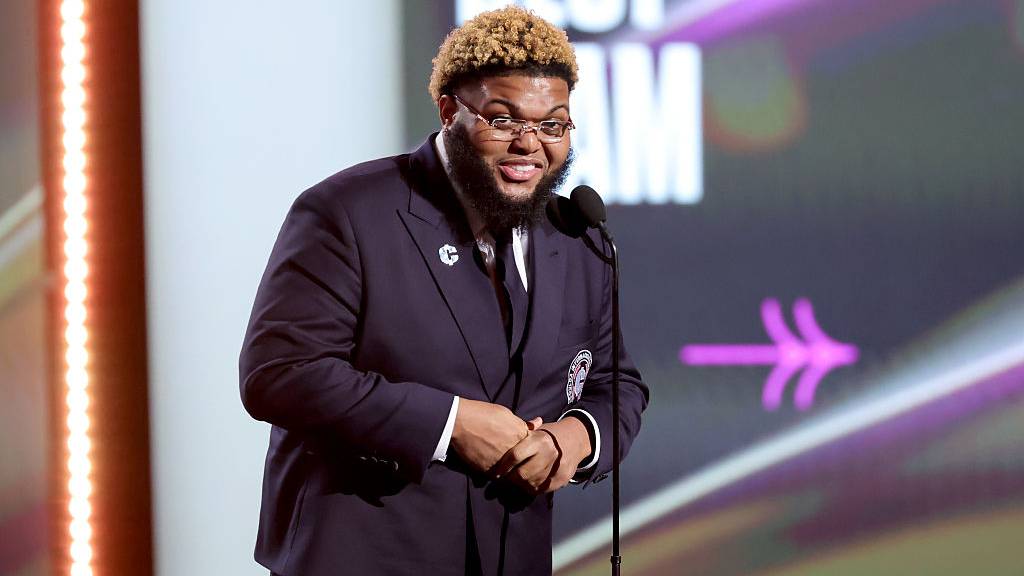
After years of writing for other artists and sitting quietly behind the scenes, singer-songwriter PYNK BEARD is embracing a new identity and stepping into the spotlight. Before the pink beard and the new name, he was Sebastian Kole, a songwriter trusted by artists like Ariana Grande, Alicia Keys, and John Legend. Now, he’s putting his own voice at the center, taking ownership of the music he’s always wanted to make.
The timing didn’t feel random to him but intentional. “I was on Instagram, and I saw a reel that said if you see a woman cut her hair and dye it red, she’s in her ‘bad b*tch era, and I was like, yeah – I feel like a bad b*tch,” he explains. “To a certain degree thats real, though. But I just felt like it was a good time. Culture finds a way,” he says. “Once it goes corporate, it figures out how to reinvent itself.” That shift is what made this moment feel right — especially as country music continues opening up in ways it hadn’t before, creating room for stories and perspectives that have too often been overlooked.
“I’m from Alabama,” he says. “And I’m like, oh, they finally knocking on my door. Let me show you what that feels like.” There’s pride in his voice when he talks about home — not just the place, but the feeling of being from somewhere and finally being recognized for it.
His roots are central to “Red Dirt Diaries,” an EP grounded in the South without chasing nostalgia. The project pulls directly from his upbringing in Birmingham, a city he feels is often misjudged and misunderstood. “Birmingham gets its rep,” he says. “But if you ever come here, that’s not what it feels like.” What it feels like, he explains, is community. “It’s a really warm, friendly place. We take care of each other.” He wanted the project to reflect that reality instead of the version people think they know. “I wanted it to feel like Birmingham. That was the whole thing.”
After years of writing for others, he found that writing for himself brought new challenges. “It’s much easier for me to tell your business than it is to tell mine,” he admits. As a songwriter, he’s used to helping artists shape their stories, deciding what is shared and what stays private. Doing that work for himself meant setting his own boundaries and figuring out how to be honest without overexposing every detail.
That tension shows up most clearly on “Too Rich For My Blood,” the song he says was hardest to write. The track reflects on nights spent chasing something he couldn’t afford emotionally, even when the money was there. “I don’t want you to feel sorry for me,” he says. “I had a blast.” The goal was to tell the truth without asking for sympathy, capturing the balance between recklessness and reflection that life sometimes demands.
As conversations around Black artists in country music continue, PYNK BEARD doesn’t see himself as entering unfamiliar territory. He speaks from a place he’s always known. “Most Black people in America live in the Southeast,” he says. “We know dirt roads and creeks. But we stuck singing about city life and high-rises. And I don’t think that’s fair.” His focus is on telling the stories that make sense to him, without trying to fit them into anyone else’s idea of what country music should sound like.
The response so far has felt encouraging, even though the world doesn’t always acknowledge black Country artists. “You hear the song, then you hear me talk, and you get it,” he says. “It’s authentic.”
That mindset guides him now, telling his story unapologetically, over familiar rhythms and melodies, and letting it land where it lands. There’s a sense of calm confidence in how he approaches this chapter, one built over years of knowing the craft, the culture, and himself.
For the country artists and songwriters coming up behind him, the message is simple: “Country music is four chords and the truth,” he says. “You don’t have to play the good guy or the bad guy. You can just be.”